
Explore the forests, wetlands, bogs, and wildlife that make Camp Minsi and the Pocono Plateau unique. Use this page to help Scouts prepare for camp, support ecology-focused programs, and deepen their understanding of the environment they’re camping in.

The Landscape
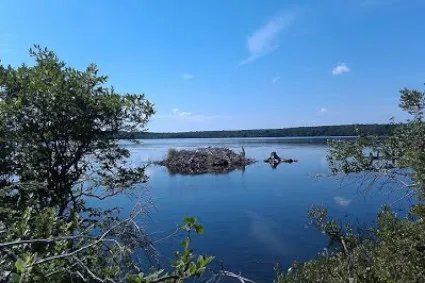
Camp Minsi is located on the shores of Stillwater Lake atop the Pocono Plateau in Pocono Summit, Pennsylvania. The area is a mix of broad, flat wetlands and low hills covered in northern hardwood forest. Camp Minsi encompasses more than 1,200 acres of Pennsylvania woodlands, with the 314-acre man-made Stillwater Lake as a central feature of the landscape.
Natural History
About 20,000 years ago, a massive glacier—at least a mile thick—covered this region. As the ice retreated, it left behind rocky glacial till, wetlands, and sphagnum bogs that still define the area today. Early inhabitants would have found dark evergreen forests, deep wetlands, and seemingly bottomless bogs.
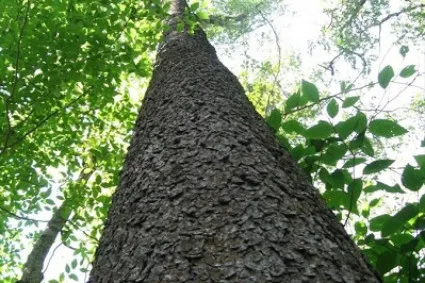
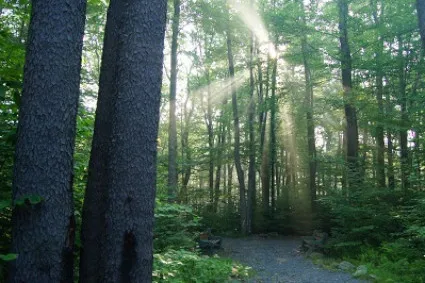
In the 1800s, extensive logging changed the forest. Today, much of it has regrown as a mixed hardwood forest dominated by American beech, oak species, and red maple.
Plants and Trees
You’ll find a rich variety of plant life in and around Camp Minsi:
Common trees
- American beech
- Black cherry
- Bear oak
- Red maple
- Sugar maple
- White pine
- Eastern hemlock
- Several birch species
Forest floor
- Hay-scented fern
- Lowbush blueberry
- Princess pine
.Seasonal highlights
- Early May: Serviceberry blossoms before the canopy leafs out
- Mid-June: Mountain laurel in bloom
- Late June–early July: Rhododendron
- Mid-July: Highbush blueberries ripen (a favorite of bears, birds, and Scouts)
Special habitats
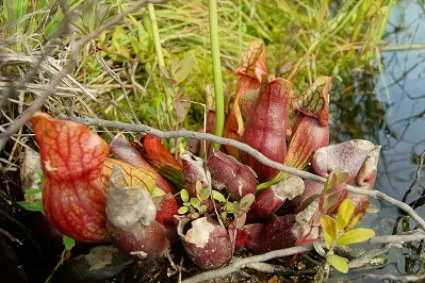
Bogs around camp support unique plants such as pitcher plants, cotton grass, sedges, and yellow bladderwort—a carnivorous plant whose tiny underwater bladders trap aquatic organisms.
Wildlife
Mammals commonly seen
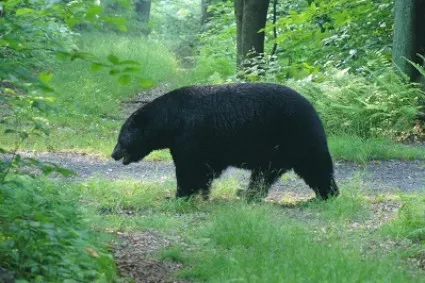
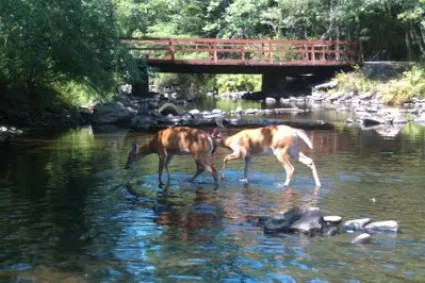
White-tailed deer, black bear, beaver, turkey, squirrel, chipmunk, muskrat, mink, fox, and raccoon.
Birds
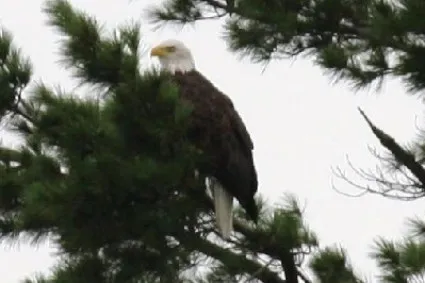
Look and listen for species such as Blackburnian warbler, red-breasted nuthatch, and northern waterthrush—birds well-suited to conifer forests and wetland edges.
Amphibians and reptiles
In spring, spotted salamanders, Jefferson salamanders, and wood frogs gather in vernal pools and bogs to breed.
Black bear safety
Black bears do live in the region. Most avoid people, but bears attracted to human food can become bold. If you encounter a bear near camp:
- Make loud noises (yelling, clapping, banging pots).
- Never feed bears or leave food unsecured.
- Never approach a bear—especially a sow with cubs.
- Notify the camp ranger or staff if you have a concern.
Fish and Aquatic Life
Stillwater Lake (314 acres) supports:
- Bass
- Pickerel
- Yellow perch
- Catfish
- Sunfish
Below the dam, the tailwaters feeding Tunkhannock Stream provide habitat for brook and rainbow trout.
Climate
Weather in the Poconos can change quickly.
- Average annual rainfall: ~48 inches (U.S. average ~37 inches)
- Average annual snowfall: ~67 inches
- July average high: ~80°F; average low: ~59°F
- January average low: ~14°F
- Elevation: ~1,800 feet above sea level
Tip for units: Remind Scouts to pack layers, rain gear, and appropriate footwear.