
Skip to main navigation
OA Logo


Register for Camp Apply for Staff Donate to Camp Minsi Council Home

Site branding

Home
Camp Minsi

Main navigation

  • Home
    • Our History
    • Directions
    • Camp Ecology
    • Master Plan
  • Cub Scout Day Camp
    • Leader Guide
    • Dining Hall & Menus
    • Overview & Dates
    • Packing List / What to Bring
    • Programs & Activities
    • Leader Guide
    • Dining Hall & Menus
    • Merit Badges & Programs
    • Overview & Dates
    • Packing List / What to Bring
    • Provisional Camping
    • Specialty Programs
    • Camp Reservations
    • Facilities & Maps
    • Beaver Day
    • Fall Family Camp
    • Camp Map
    • Check-In & Arrival Information
    • Directions
    • Health & Safety Info
    • Camp Leadership / Ranger
    • Report Maintenance Concern

Breadcrumbs

Breadcrumb

  • Home
  • Rise of the Lumber Industry
  • Rise of the Lumber Industry
  • Ice Harvesting on Stillwater Lake
  • Camp Minsi at the Delaware Water Gap
  • Camp Weygadt at the Delaware Water Gap
  • Camp Minsi at Lake Tobyhanna
  • Camp Minsi at Lake Stillwater

At a Glance

  • Era: Mid-1800s – early 1900s
  • Industry: Timber & sawmills
  • Impact: Logging roads, rail lines, and cleared land around Stillwater Lake

Did You Know?

Many of the roads later used by Scouts and leaders to reach Camp Minsi began as rough logging routes through the Pocono forests.

Next: Ice Harvesting on Stillwater Lake →

← Back to History Journey

Rise of the Lumber Industry

Main page content

Up until the 1870s, most of the land of the Pocono plateau was pristine forest. The area was full of large trees and dense swamp. The Native Americans called the area that is now Stillwater Lake “Klampeechen Chuppecat,” which translates to “deep, dark swamp.” Those early, original inhabitants were the “Minsi” tribe of the Leni-Lenape Indians.

As new settlers established themselves on the Pocono Plateau starting in the early 1800s, the rich resource of timber brought lumbermen to the mountain. The swamp area itself was fully cleared of all timber, and its water supply and topography provided opportunity for a man-made dam to be built.
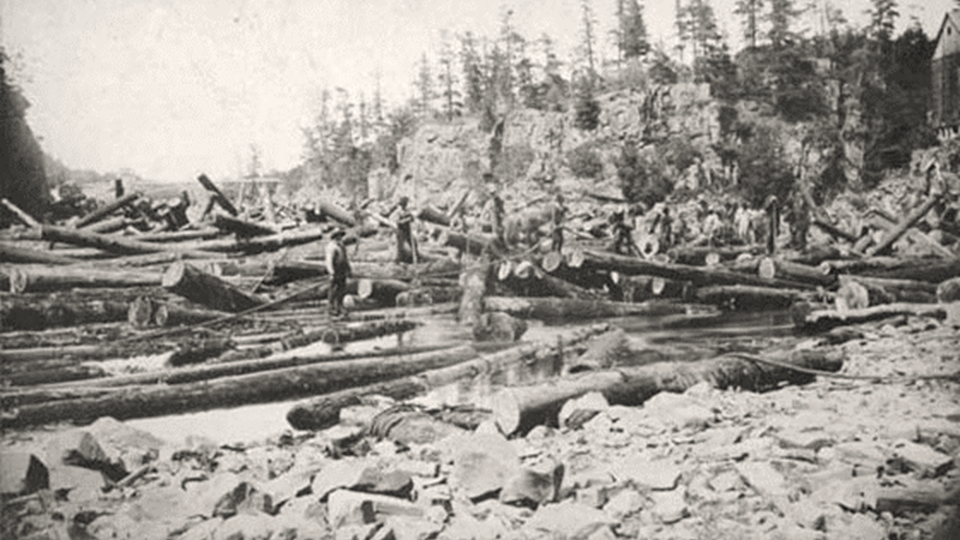
Logging at Stillwater Lake

Although the exact date of the dam construction is unknown, it was built prior to 1871. First known as “Tunkhannock Lake,” the initial purpose of this lake was to provide a water vehicle for timber to flow to the already built Pocono Lake. Known as a “splash dam,” the dam would be breached and the resulting flood would carry the logs downstream to the saw mill.

During this time, businessmen from New York City and the surrounding areas began buying up the land from local residents and clear-cutting the plateau to harvest the lumber. The small stream that ran through the swampy area was soon dammed to create a lake.

By the 1830s, lumbering was taking place on a massive scale throughout the region. By 1860, Pennsylvania, with over 28-million acres of land (much of which was densely forested) had become America’s lumbering champion.

Council Number: 502 | Registered 501(c)(3) | EIN: 23-1708585 | Copyright © 2025 Minsi Trails Council - All rights reserved